Connect your providers.
Import provider credentials and map their locations, targeting, and session options. Build pools from the supply you contract, and assign them to the products you offer.
We build and maintain ProxyRequest for operators who want to run a proxy business with their own providers, products, and brand. It brings provider routing, customer access, traffic accounting, and commercial workflows into one platform.
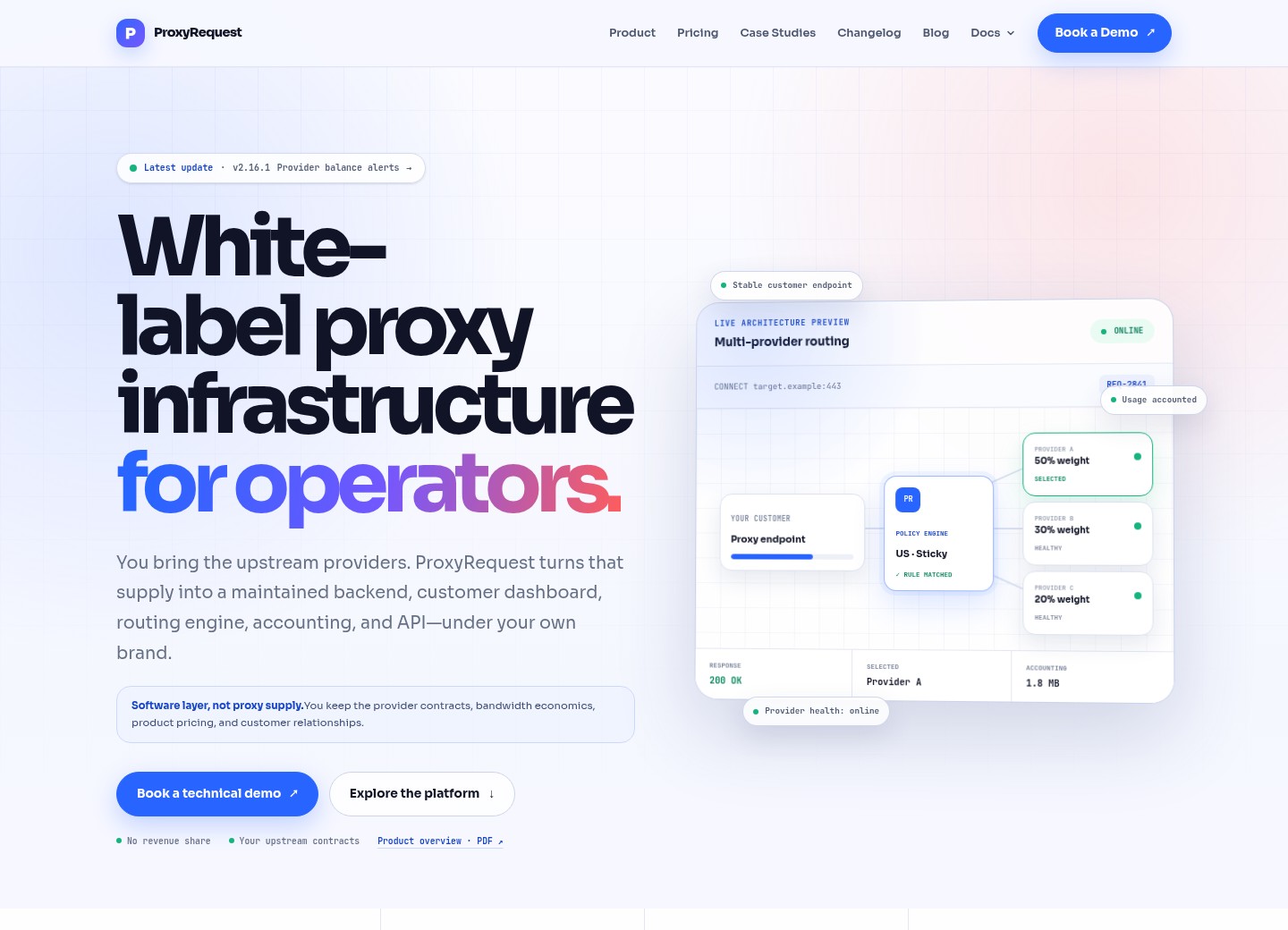
A proxy service needs a way to turn supplier access into packages, credentials, customer balances, and usable reports. ProxyRequest connects these workflows so operators can manage the service from one place. Customers use the products and access rules the operator publishes.
Import provider credentials and map their locations, targeting, and session options. Build pools from the supply you contract, and assign them to the products you offer.
Set provider weights, locations, and session behaviour behind stable customer endpoints. Route selection considers provider capabilities and health before applying the configured weights.
Configure packages, allowances, pricing, and access rules. Publish a customer catalogue and connect purchasing, orders, invoices, and proxy delivery to the same product records.
Issue credentials, manage users and sub-users, and apply traffic and connection limits. Customers can generate proxy access, inspect their packages, and review consumption in their dashboard.
Record transferred bytes against the consuming account and its order. Usage updates feed remaining allowances and analytics, connecting the proxy connection to the customer's service record.
Review traffic, request records, errors, and provider health. Use the API for provisioning and reporting, with signed webhooks to bring balance updates into connected business systems.
Both options use the platform's routing and accounting services. Choose the operating model that fits the customer experience and business systems you already have.
Run supply, products, customer accounts, and reporting through the operator interface. Give customers a branded dashboard connected to the same packages, orders, credentials, and usage records.
Keep your frontend, customer model, checkout, and subscriptions. Map their records to ProxyRequest resources and use the platform to provision proxy access, route connections, and account for traffic.
The operator owns provider contracts, product pricing, and customer relationships. Our team develops and maintains the platform and managed gateway layer. Upstream traffic is purchased directly from the operator's chosen providers.
Customer credentials resolve to an account, package, and available allowance. The gateway selects an eligible provider route. Traffic records then connect that activity to account balances and the reporting shown in both dashboards.

Published product views from ProxyRequest show the two sides of the platform. Figures and balances belong to the example interfaces.
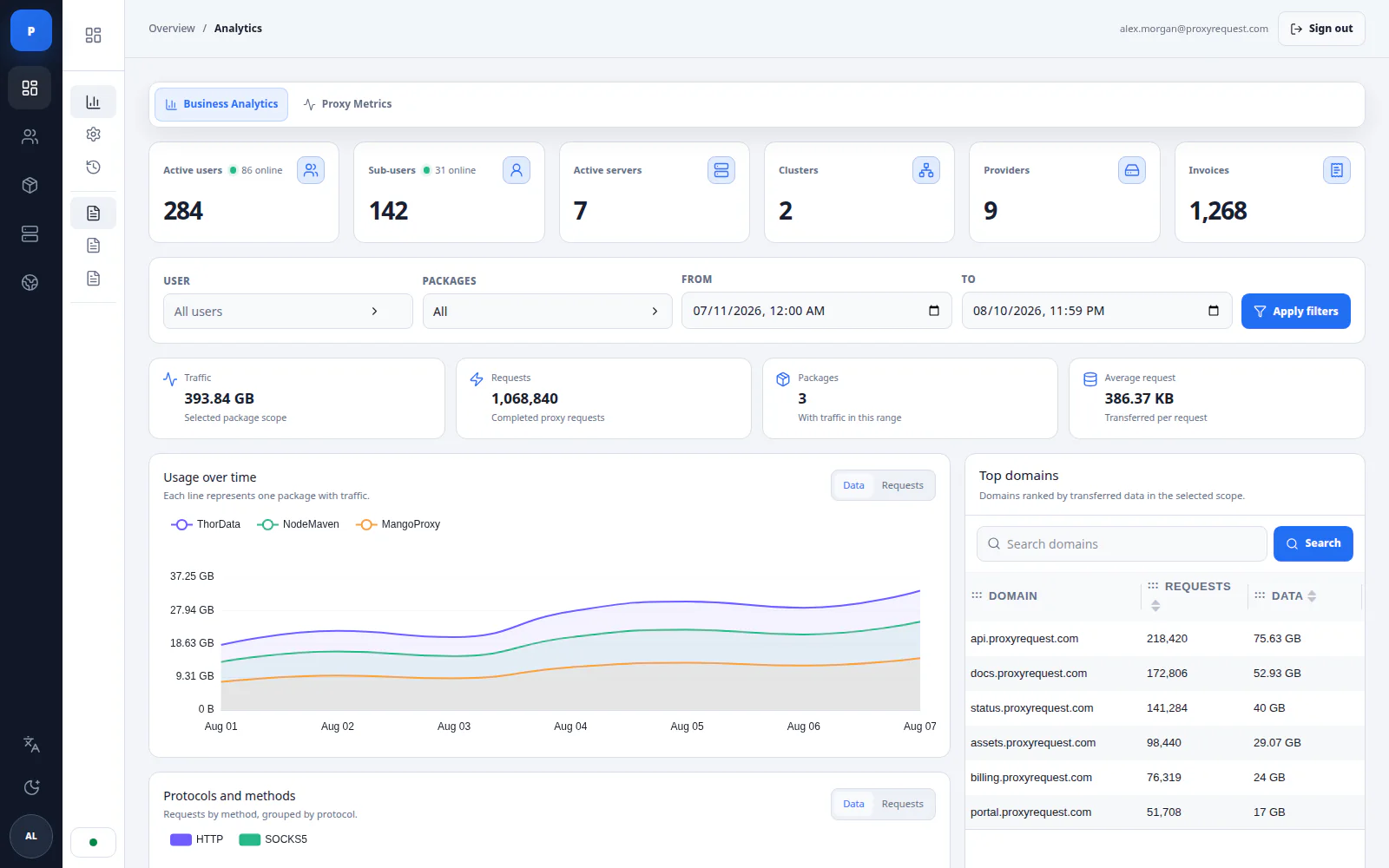
01 / Operator dashboard: platform activity, traffic history, and destination reporting.
View published image ↗Rust handles proxy connections and location services. Go accounts for traffic, while the Django control plane connects provider configuration, customer access, and service operations.
Full support for TCP and UDP traffic.
Protocol and location availability on a customer route depends on its package and eligible upstream providers.
Schedule a consultation with our proxy infrastructure experts and discover how enterprise-grade solutions can accelerate your growth.