CashBrain
SDK development / Bandwidth monetization

Go on the device.
Go in the proxy engine.

We developed the bandwidth monetization SDK and server-side proxy engine for CashBrain in Go. The work connects application integration, residential traffic routing, and the device and earnings data shown to users.

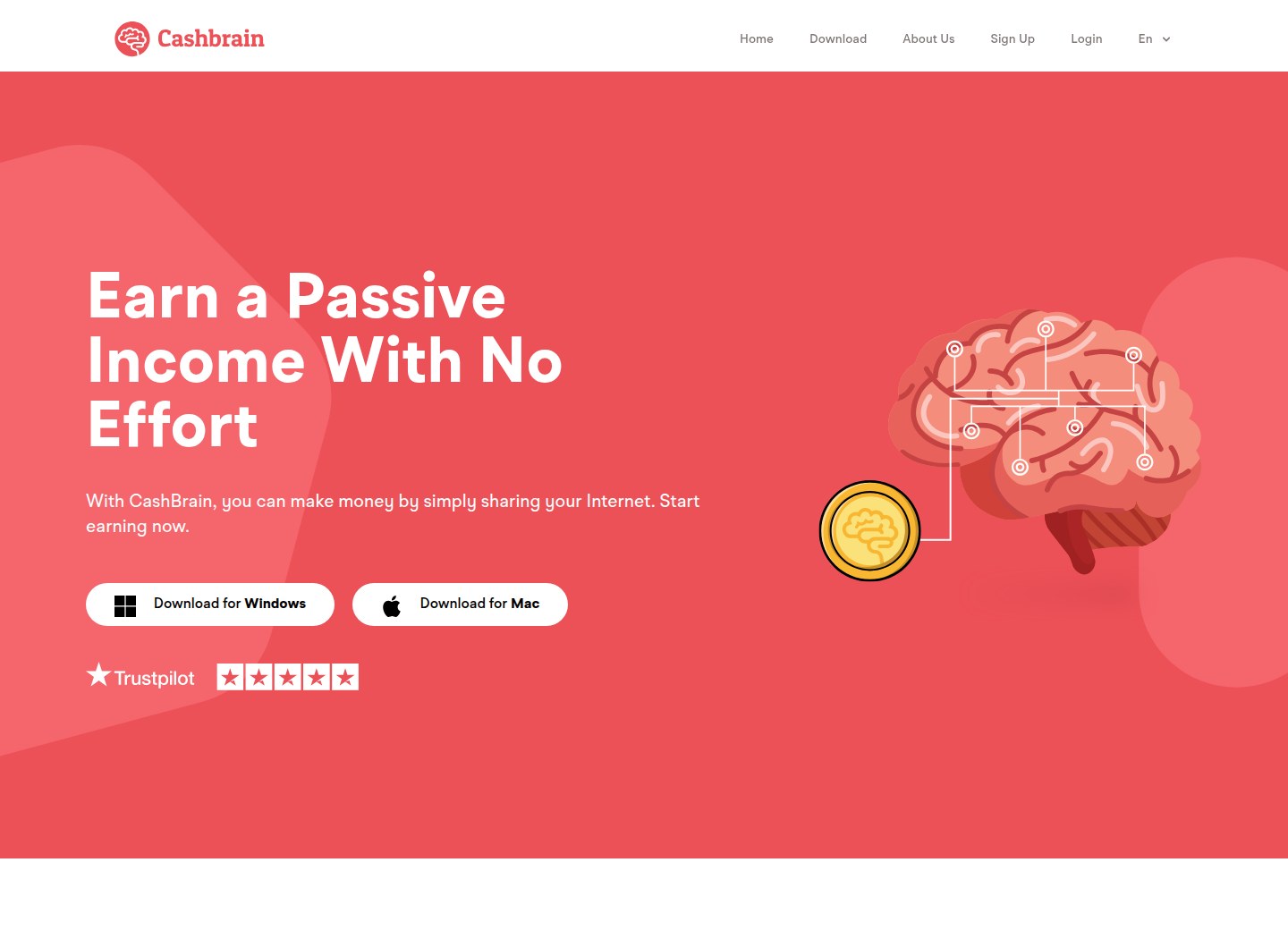
CashBrain public website homepage
Product website · September 2026
Product
Bandwidth sharing & app monetization
Our work
Go SDK, proxy engine & backend
Core language
Golang on both sides of the connection
The engineering brief

Turn a device connection into a usable residential exit.

CashBrain brings together two sides of a network: people contributing internet bandwidth and customers sending proxy requests. Our task was to build the software between them, from the SDK inside the application to the server handling the request.

01 / Embedded component

A Go SDK inside the application

The SDK provides the network connection that makes a participating device available to the service. Its integration boundary covers starting and stopping the connection, authentication, connection state, and recovery after interruptions.

  • Keep network lifecycle logic in the SDK so each application does not need to recreate it.
  • Expose connection status that the host application can present to the user.
  • Handle disconnections and release connection resources when sharing stops.
02 / Server component

A Go engine for proxy traffic

The server-side engine accepts proxy traffic and routes it to an available device. It handles the customer-facing part of the connection: access checks, endpoint selection, sessions, and request forwarding.

  • Match a request with a suitable residential connection.
  • Manage concurrent connections and the lifetime of each session.
  • Connect traffic handling to the backend that accounts for network use.
Request path

From the proxy customer to the destination.

A customer request enters the Go gateway, travels through a device running the SDK, and reaches its destination through that device’s internet connection. Usage records connect this network activity to the product’s accounting layer.

Proxy customer sends a request to the Go gateway, then through a device running the Go SDK to the destination. Gateway usage records feed accounting and the rewards dashboard.
Component overview. Arrows show the outgoing request path; responses return through the same connection. The accounting branch connects traffic records to user-facing earnings and device views.
Why Go here

One language across two different runtimes.

Go was used for both the SDK’s networking core and the server proxy engine. That gives the project a common language for connection handling and protocol behaviour while keeping device and server responsibilities distinct.

On a device, the main concern is the lifetime of a background connection. At the gateway, it is coordinating many active requests. Go’s concurrency model is useful on both sides, but each still needs explicit limits, cancellation, and cleanup.

Connection ownership
Each connection needs a clear owner and an end condition. A stopped SDK session should release its sockets and background work.
Timeouts and recovery
Residential connections can disappear or change. Request deadlines and reconnection behaviour need to account for that without leaving work waiting indefinitely.
A focused integration boundary
The network core belongs in the SDK; application screens and product choices remain with the host application. Platform packaging sits around that boundary.
From network state to product state

Make the connection visible to the user.

The backend connects the SDK and proxy engine to device management, usage accounting, and earnings. The product screens show how these concerns become everyday actions in the CashBrain account.

Device inventory

A user needs to know which devices are connected. Device records and connection status give the account a view of the software running outside the browser.

Traffic and earnings

Network usage is the input to accounting. The earnings overview translates that activity into a balance and history the user can inspect.

Account operations

Device lists, balances, and transaction history belong to the same account. Keeping those records connected makes support and day-to-day management practical.

Engineering stack

Technology behind the platform.

CashBrain combines a Go SDK and proxy engine with a Django control plane. Traffic accounting connects network activity to device and earnings records.

Go

  • Mobile and desktop SDK for bandwidth sharing.
  • Proxy engine and connection handling.
  • Traffic metering and usage accounting.

Python 3 / Django

  • Control plane and application API.

ClickHouse

  • Analytics storage and queries.

Redis

  • Cache.

PostgreSQL

  • Control plane data storage.

NATS

  • Message queue.

SDK platform support

Full SDK support for the following operating systems.

  • iOS
  • Android
  • macOS
  • Windows
  • Linux

Ready to Transform Your Business Performance?

Schedule a consultation with our proxy infrastructure experts and discover how enterprise-grade solutions can accelerate your growth.